
INDUSTRY APPLICATIONS
Automotive Parts
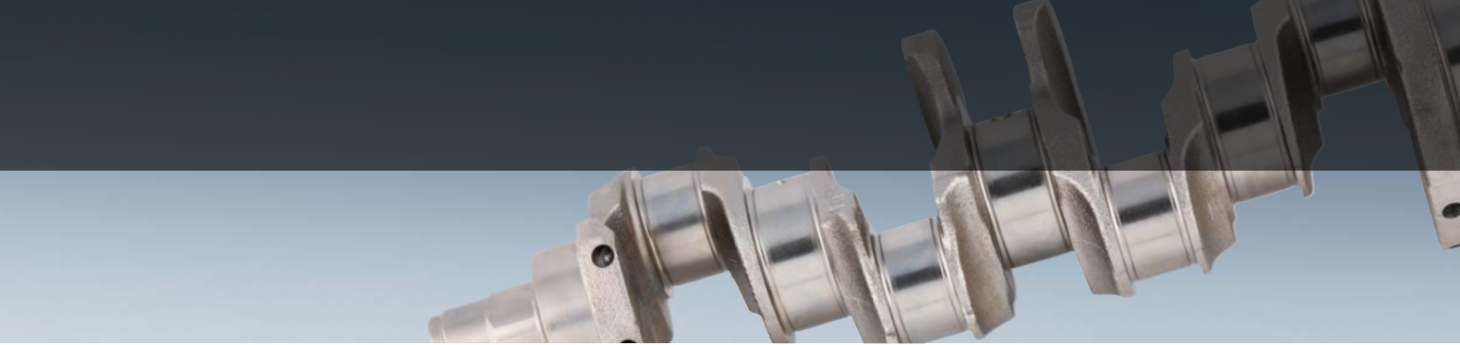
The application spans several automotive grinding operations. For this product range, discuss the particular flat part, material, tolerance and production requirement before choosing a double-disc configuration.
Selection focus
- Bearing and engine components
- Flat-part process selection
- Separate tooling for different operations
Provide the material, drawing, incoming condition and target finish. The correct machine, abrasive and workholding need to be assessed together.
Automotive grinding covers many distinct operations
The manufacturer’s guide separates crankshaft journals, flange/post finishing, wheel dressing, polishing and injector-bore work. It describes superabrasive tools across automotive-component processing rather than a single grinding-machine solution.
Identify material and the surface to finish
The source distinguishes cast-iron and steel crankshaft applications and discusses different abrasive/bond systems. These cylindrical and bore examples do not establish the double-disc range as suitable for every automotive part.
Compare the listed tool routes
The guide describes vitrified CBN for journals, aluminium-oxide wheels for certain bearing operations, electroplated CBN for roughing, and bonded wheels for flange/post finishing. It also discusses dressing and crankshaft polishing belts. Use the relevant process family for the drawing.
Roughing, finishing and dressing have different roles
The source separates roughing from finish grinding and explains dressing/truing as restoring wheel geometry. It also treats polishing belts as a distinct crankshaft-finishing operation. These distinctions guide an enquiry toward the actual operation.
Describe the automotive component before specifying the tool
State whether the job concerns a journal, bearing surface, flange, injector bore or another geometry, then provide material, machine model and required finish. The source offers process descriptions; the production sequence and acceptance limits for your part still need a specific proposal.
No universal production improvement is assumed
The original guide contains performance statements and broad application lists. This overview does not turn those into guaranteed tool life, throughput or dimensional results. Check the applicable tool specification and workpiece evidence before ordering.